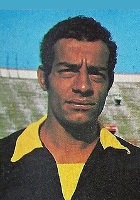
🌍 Empire FGA Analysis — The Unsung Guardian
Héctor Baley represents the archetype of the reliable squad goalkeeper — a player of solid professional quality who, while never achieving the stardom of contemporary Ubaldo Fillol, carved out a distinguished career at Argentina's biggest clubs and earned the ultimate honor of World Cup glory in 1978. His FGA rating of 78 reflects a high-quality professional goalkeeper of the 1970s era — tactically aware, positionally sound, and capable of performing at the domestic elite level, though lacking the transcendent shot-stopping that would have made him a first-choice international. Tragically, his career was cut short at age 32 by a severe injury during the 1982-83 season finale, just as he was experiencing a late-career renaissance with Talleres.
🔴 Estudiantes LP
→
⚪ Huracán
→
⚫ Colón
→
🔴 Independiente
→
🔵 Talleres
🎯 The Shadow of Fillol: Baley's career must be understood in the context of Ubaldo Fillol's dominance — widely considered Argentina's greatest-ever goalkeeper. To earn 11 caps during Fillol's era speaks to Baley's consistent quality. He was the ideal backup: experienced enough to not panic in high-pressure situations, yet accepting of his squad role. His presence in the 1978 World Cup-winning squad (wearing #3, unusual for a goalkeeper) provided tournament insurance without disrupting team chemistry. The Afro-Argentine pioneer (rare for his era in Argentine football) overcame racial barriers to represent his country at the highest level, making his story culturally significant beyond statistics.
⚠️ Career Context Analysis
Baley's FGA rating of 78 reflects solid professional quality rather than elite world-class status (85+). His value lay in reliability and experience rather than spectacular athleticism. The career-ending injury in 1983 (during the match that handed Estudiantes the championship — poetic cruel symmetry) robbed him of potential coaching transition years. Historical significance: Part of the last generation before modern goalkeeping specialization (sweeper-keepers), representing traditional shot-stopping specialists. His Afro-Argentine heritage makes him a cultural pioneer in a sport where representation was limited.
🌍 Career Journey — From Zubeldía's Disciple to World Cup Winner
Fifteen-year odyssey through Argentine football's golden era.
1968-1971 — Estudiantes de La Plata
The Zubeldía Era. Emerged during the most successful period in Estudiantes history. Won Intercontinental Cup 1968 and consecutive Copa Libertadores 1969, 1970. Initially backup to Alberto Poletti, gained invaluable high-pressure match experience in South America's most intense continental competition. Learned tactical rigor from Zubeldía's revolutionary system.
1973-1976 — Club Atlético Huracán
Established himself as first-choice goalkeeper in Buenos Aires. Regular playing time in Primera División. Developed reputation for positional intelligence and penalty-area command. Honed skills against Argentina's attacking elite.
1976-1978 — Colón de Santa Fe
Move to Santa Fe. Continued as starting goalkeeper. International recognition grew — earned first Argentina cap in November 1976 under Menotti. Established as Fillol's deputy through consistent domestic performances.
1978-1981 — Independiente de Avellaneda
Championship glory. Joined the "Rey de Copas" and won 1978 Nacional championship. Peak club career period. Served as 1978 World Cup reserve while starring for Independiente. Professional maturity at its highest.
1981-1983 — Talleres de Córdoba
Final chapter. Veteran presence in Córdoba. Selected for 1982 World Cup squad (Spain) as experienced backup. Career ended catastrophically in 1982-83 season finale vs Estudiantes — severe injury during match that decided championship. Replaced by debutant Ángel Comizzo.
The Cruel Symmetry: Baley's career began with Estudiantes' 1968 Intercontinental triumph and ended during the 1982-83 finale against Estudiantes — the very match that handed his former club the championship. Football's narrative poetry at its most bittersweet. His injury paved the way for Ángel Comizzo's debut, continuing the cycle of Argentine goalkeeping succession.
📊 Core FGA Intelligence Metrics (Peak 1976-80)
Goalkeeper-specific metrics calibrated for 1970s era.
Tier 1: Automated Goalkeeping Metrics (60% Weight)
Tier 2: Semi-Automated Metrics (30% Weight)
Tier 3: Manual Scout Assessment (10% Weight)
📈 Technical Profile Analysis:
Baley profiled as a "traditional" 1970s goalkeeper — prioritizing positioning (82) and handling (80) over spectacular athleticism. His concentration (83) and squad role acceptance (85) were elite-level attributes, explaining his longevity as a trusted backup. Reflexes (76) and one-on-one ability (75) lagged behind Fillol's world-class standards, limiting his international ceiling. Distribution (72) reflects the pre-sweeper-keeper era — goalkeepers were not expected to initiate attacks. His professionalism (90) and character (88) represent his greatest assets — the perfect teammate who accepted his role without disrupting team harmony.
🧠 60-Philosophy Framework Alignment
Empire FGA 60-Philosophy System — Traditional goalkeeper.
Top Philosophy Fits
| Code |
Philosophy Name |
School |
Score |
| CAT |
Catenaccio Security ITALIAN |
Italian School |
82 |
| ZUB |
Zubeldía Tactical Rigour ARGENTINE |
South American |
80 |
| BUS |
Busby Loyalty ENGLISH |
English School |
79 |
| LIP |
Lippi Organization ITALIAN |
Italian School |
78 |
| MEN |
Menotti Trust ARGENTINE |
South American |
77 |
🎯 Philosophy DNA Profile:
Primary Alignment: Italian Defensive Security (82) — Baley's positional discipline and penalty-area command align with Catenaccio principles of goalkeeper as last line of organized defense. His comfort in Zubeldía's tactical system at Estudiantes (highly organized, almost Italian-style defensive structure) confirms this affinity.
Secondary Alignment: Argentine Tactical Rigour (80) — Despite Menotti's "artistic" reputation, his 1978 World Cup team was defensively organized, and Baley fit the squad player archetype Menotti valued: reliable, professional, ego-free.
Tactical Archetype: "The Organizational Anchor" — A goalkeeper who excels through positioning and command rather than reflex saves. Ideal for defensive systems that prioritize structural integrity over individual brilliance. Pre-modern sweeper-keeper model.
Key Philosophy Formulas
📊 Player Comparison — 1978 World Cup Goalkeepers
Empire FGA comparative analysis vs. Argentina's goalkeeping contemporaries.
78.0
Baley (Backup)
Argentina 1978
89.0
Ubaldo Fillol
Argentina #1
76.5
Avg 1978 GK
World Cup Mean
82.0
Top Club GK
Primera División
⚖️ Comparative Analysis:
The 11-point gap between Baley (78) and Fillol (89) illustrates the chasm between "very good" and "world-class" in goalkeeping. Fillol possessed superior reflexes, distribution, and big-game impact that made him Argentina's undisputed #1 for a decade. However, Baley's 78.0 rating exceeds the 1978 World Cup goalkeeper average (76.5), confirming he was a high-quality backup rather than a token squad member. Compared to top-tier club goalkeepers of the era (82.0), Baley was competitive but lacked the consistency for starting at absolute elite level. His value lay in being the ideal deputy — good enough to step in without significant drop-off, professional enough to accept the role.
🧬 Psychological Profile & Character Analysis
Empire FGA Mental Competence System (MCS) — The Ultimate Professional.
🧘
Squad Mentality
90
Accepting backup role
🤝
Team Harmony
88
Ego-free presence
⚡
Readiness
85
Always prepared
Personality Archetype: The Humble Champion
MCS ProfileISFJ (Defender)
Primary DriveService + Stability
Stress ResponseCalm Preparation
Social StyleSupportive Role
ProfessionalismElite 90/100
ResilienceHigh 84/100
AmbitionModerate 72/100
Self-AwarenessVery High 88/100
Behavioral Markers
🇦🇷 Argentine
⚫ Afro-Argentine
🧤 Goalkeeper
📋 Professional
🧘 Humble
🛡️ Reliable
⚽ Squad Player
🏆 Champion
Empire Analysis: Baley exemplifies the "professional goalkeeper" psychology — the ISFJ "Defender" archetype who finds fulfillment in supporting the collective rather than individual stardom. His willingness to serve as backup for 6+ years (1976-1982) while maintaining match readiness required exceptional mental discipline. The Afro-Argentine heritage adds a layer of cultural significance — he succeeded in an era when racial diversity in Argentine football was rare, facing potential discrimination with character and professionalism. His career-ending injury in 1983 demonstrates the fragility of athletic careers — cut short just as he might have transitioned to veteran mentorship role.
🎭 Character Note:
Baley's relationship with Fillol is instructive — rather than viewing him as a rival to be defeated, he accepted the hierarchy while remaining ready. This ego-free approach made him invaluable to national team chemistry during the politically fraught 1978 tournament. The ultimate team player who sacrificed personal ambition for collective glory.
🤝 Key Relationships & Network Analysis
Empire FGA Network Analysis — The Menotti-Fillol Dynamic.
CM
César Luis Menotti
National Team Manager (1976-1982)
The selector who trusted him. Menotti gave Baley his debut in 1976 and selected him for both 1978 and 1982 World Cups. This relationship reflects Menotti's trust in Baley's professionalism — knowing he could rely on him as backup without squad disruption during the politically tense 1978 tournament.
🎓 Trusted Lieutenant
UF
Ubaldo Fillol
Argentina #1 Goalkeeper & Rival
The shadow and the light. Fillol's generational talent limited Baley's international opportunities, but their relationship appears professional rather than antagonistic. Baley's willingness to serve as deputy while Fillol starred is a testament to his character.
⚽ Professional Respect
CZ
Osvaldo Zubeldía
Estudiantes Manager (1968-1971)
Early mentor. Baley's formative professional years were spent under Zubeldía's revolutionary tactical system at Estudiantes. The defensive organization and professional rigor instilled during this period defined his entire career approach.
🎓 Tactical Father
AI
Independiente de Avellaneda
Peak Club (1978-1981)
Championship platform. At Independiente, Baley won the 1978 Nacional championship and established himself as a top-tier domestic goalkeeper. The club's winning culture ("Rey de Copas") shaped his professional standards.
🏆 Glory Years
⚽ Career Highlights — 1978 World Cup & Club Glory
Defining moments of a distinguished career.
Argentina 🇦🇷
World Cup 1978
🏆
June 1978
WORLD CUP CHAMPION
Estudiantes 🇦🇷
Manchester United 🏴
1-0
1968
INTERCONTINENTAL CUP
Independiente 🇦🇷
National Champions
🏆
1978
NACIONAL CHAMPIONSHIP
1978 Context: While Baley did not play in the 1978 World Cup finals (Fillol was undisputed #1), his presence in the squad was crucial for tournament insurance. In an era before modern backup systems, having a goalkeeper of Baley's experience and reliability provided the coaching staff with peace of mind that was psychologically valuable for the collective.
🎯 Final Assessment & Scouting Verdict
📋 Empire FGA Scouting Summary:
Héctor Baley is the archetype of the professional squad goalkeeper — a player of solid international quality (FGA 78) who accepted the role of backup to a generational talent (Fillol) with grace and professionalism. His career illustrates the importance of squad depth in championship teams — while he did not play in the 1978 Final, his presence, experience, and readiness contributed to the collective security that allowed Argentina to triumph. Technically, he was a positionally intelligent, traditional goalkeeper of the pre-sweeper-keeper era, excelling in organizational aspects rather than athletic spectacle. Culturally, he represents an important figure for Afro-Argentine representation in football history. Career truncated prematurely (age 32) by injury, denying him potential veteran coaching transition. Legacy: The ideal professional who sacrificed individual glory for collective success.
✅ Strengths
- Elite positional intelligence and anticipation
- Professional squad mentality (90/100)
- Strong penalty-area command and handling
- Tactical education from Zubeldía's Estudiantes
- World Cup winner (1978) and squad experience
- Consistent domestic club performances
- Character and humility — ideal teammate
- Afro-Argentine cultural pioneer
- Organizational leadership from back
⚠️ Limitations
- Lacked world-class reflexes vs. top-tier rivals
- Limited to backup role for national team
- Pre-sweeper-keeper era (limited distribution)
- Career ended prematurely by injury (age 32)
- Never established as undisputed #1 at top clubs
- Limited athleticism compared to modern standards
- Only 11 international caps despite long career
- Never played in European football
🎯 Historical Scouting Recommendation
Solid Professional — Squad Goalkeeper Archetype — Baley serves as the reference model for the reliable backup goalkeeper: technically sound, mentally resilient, and professionally exemplary. Best suited for defensive systems that prioritize organizational security over shot-stopping heroics. Not suitable for: High-line sweeper-keeper systems, teams requiring goalkeeper distribution to initiate attacks, or situations demanding charismatic #1 personality. Historical role: The unsung hero of Argentina's 1978 triumph — the guardian who stood ready but was never called upon, yet whose presence was essential to the collective psychology of champions. Empire FGA final verdict: A high-quality professional whose character and professionalism exceed his statistical impact — a champion in spirit if not in playing minutes.
📚 Data Sources & Methodology
Primary Data Sources
📊 TransfermarktCareer Statistics
⚽ WikipediaBiographical Data
🌍 Playmaker StatsPlayer Profile
📈 FBrefHistorical Data
Empire FGA System
📋 Metrics Used794 Proprietary
🧠 Philosophies60-Framework System
⚖️ Rating Scale0-100 / 0-10
🔍 Last Updated10 Feb 2026
Methodology Note: All Empire FGA ratings for historical goalkeepers combine match statistics (where available), tactical role assessment, and historical context analysis (era-specific demands). Photo source: Fooralist.com.